The IAS Officer Who Turned to Facebook to Build a 100-km Road No Government Would Finish
Civil Service
For nearly three decades the people of Tousem in Manipur lived without a usable road. A 100-km link that could have ended their isolation was promised, surveyed and shelved again and again. It was finally built not because a government funded it, but because one young officer and thousands of ordinary donors refused to wait any longer.
Key facts
Paid for from personal savings to New York
The villagers who built it themselves
The Miracle Man of Tousem
In Tousem, a cluster of hamlets tucked into Manipur’s Tamenglong district, the sick were once carried to hospital on bamboo stretchers because no road was wide enough for a vehicle. Villagers first had to wade across a river and then walk for roughly five hours to reach the nearest town. The road that could have changed this had been sanctioned and abandoned so many times that most people had stopped believing it would ever exist.
A road stuck on paper for thirty years
The Tamenglong-Haflong road was meant to connect Tousem to the rest of Manipur and onward to Assam and Nagaland. It first appeared in official plans in the early 1980s, under the Sixth Five Year Plan. Public works crews built parts of it during that decade, but the project kept stalling. In 1997 the Border Roads Organisation declined to take on the remaining stretch, citing a faulty alignment. Ministers visited in 2006 and again in 2011, offered reassurances, and left without any construction beginning.
Into this history stepped Armstrong Pame. In 2012 the 28-year-old officer, a 2009-batch IAS recruit and the first from the Zeme Naga community, was posted as sub-divisional magistrate of Tousem. He was from Tamenglong himself, so he understood both the terrain and the daily cost of its isolation. When he formally asked the state government to fund the missing section of road, the answer was no. There were no resources to spare.
Paid for from personal savings to New York
Rather than accept the refusal, Pame decided to raise the money himself. He put in Rs 5 lakh of his own savings. His brother, a Delhi University teacher, added Rs 1 lakh, and his mother contributed a month of his father’s pension. Then he did something unusual for a civil servant in 2012. He opened a Facebook page and appealed for donations.
The response astonished him. A stranger in the United States pledged 2,500 dollars overnight, and a Sikh man in New York followed with 3,000 dollars. As media coverage spread the story, contributions arrived through collection points in Delhi, Pune, Bengaluru, Chennai, Guwahati, Shillong and Dimapur, and from Indian communities in Canada, the United States and the United Kingdom, often just a few hundred rupees at a time. Around Rs 40 lakh was raised in all. It was enough to hire bulldozers and earthmovers, but not to pay for labour.
The villagers who built it themselves
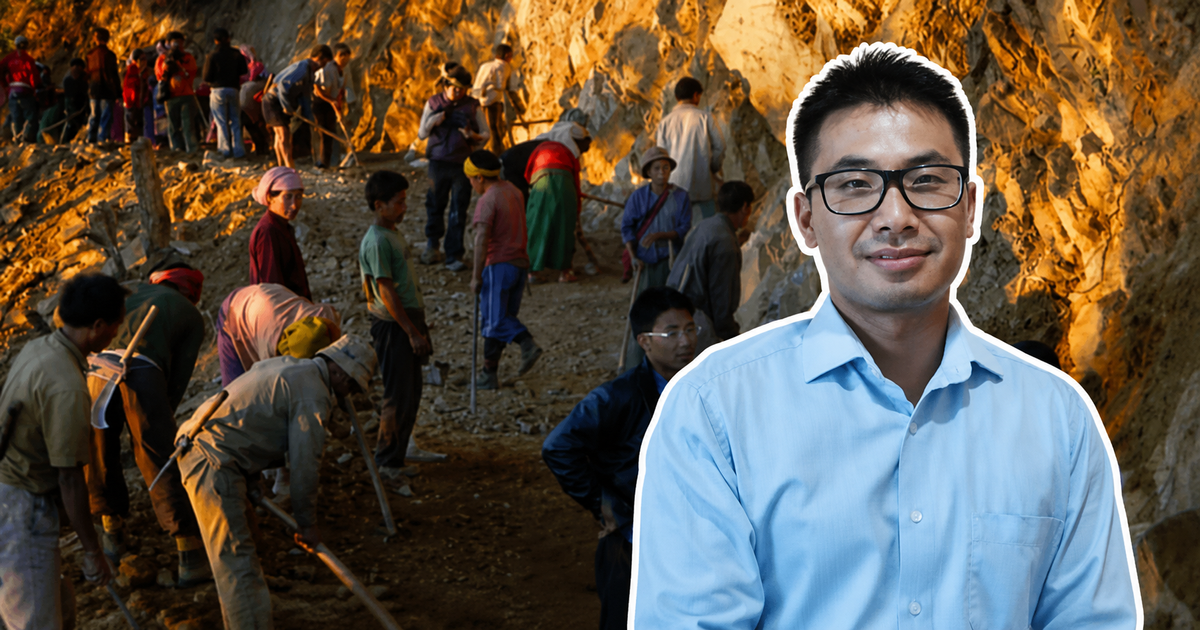
The labour came for free, from the community. On the day work began, roughly 250 villagers turned up with spades, more than 100 of them women. When Pame asked what they were doing, one replied simply that it was their road and they were building it with him.
Construction started in August 2012, paused through the monsoon, and resumed a few weeks later. Villagers cleared thickets with machetes and daos and kept the work crews supplied with fuel, food and shelter. The road was finished in just seven months and inaugurated on 17 February 2013 at Katangnam village, where a stone monolith now carries the names of everyone who contributed. Locals named it the People’s Road.
The Miracle Man of Tousem
The project drew national attention, and Pame came to be called the Miracle Man across Manipur. He was nominated for the CNN-IBN Indian of the Year award in the public service category, and Facebook flew him to its California headquarters to describe what he had done. He later received India’s Most Eminent IAS Officer Award in 2015 and a Distinguished IAS Officers Award in 2021.
As district collector of Tamenglong, he began inviting schoolchildren from across the district to his home for a weekly dinner, telling them he hoped it would give them a zeal to do well and live their dreams. His career has since taken him across the country, including postings as a director in the Department of School Education and Literacy and as a joint secretary in the Union Ministry of Higher Education, before he was repatriated to the Manipur cadre in May 2026.
More than a decade on, the People’s Road stands as quiet proof of a simple idea. Patience with unfulfilled government promises has its limits, and a community trusted to build for itself rarely lets the chance go to waste.