
How to Answer an Ethics Case Study
Chapter 26 · Ethics Case Studies · Part 1 A method for unseen cases that works under time pressure, and the single classification that decides how the whole answer should be written. Chapter 26...
Fortune favours the bold
Chapter 26 · Ethics Case Studies · Part 1 A method for unseen cases that works under time pressure, and the single classification that decides how the whole answer should be written. Chapter 26...
Chapter 25 · Corruption · Part 4 What has actually reduced corruption, what has not, and what an individual officer can do inside a system he did not design. Chapter 25 · CorruptionPart 1...
Chapter 25 · Corruption · Part 3 The costs are usually listed as economic. The more serious ones are distributional and institutional, and they compound. Chapter 25 · CorruptionPart 1 · What Corruption Is,...
Chapter 25 · Corruption · Part 2 Corruption persists where the expected gain exceeds the expected cost. Every cause below is a variation on that arithmetic, and every remedy changes one of its terms....
Chapter 25 · Corruption · Part 1 Corruption is the use of entrusted authority for private gain. The definition is easy; the useful work is in distinguishing its forms, because each has a different...
Chapter 24 · Utilisation of Public Funds · Part 3 The principles applied to eight situations an officer actually encounters, from procurement to relief, with the specific temptation each carries. Chapter 24 · Utilisation...
Chapter 24 · Utilisation of Public Funds · Part 4 A case that inverts the usual problem. You have money left, a month to spend it, and every incentive to spend it badly. Chapter...
Chapter 24 · Utilisation of Public Funds · Part 2 The single largest source of avoidable waste in Indian public expenditure is not corruption. It is the calendar. Chapter 24 · Utilisation of Public...
Chapter 24 · Utilisation of Public Funds · Part 1 Public money is not the government’s money. Every principle in this chapter follows from that one sentence, and an answer that starts there writes...
Chapter 23 · Accountability · Part 4 What an officer can build inside his own charge, and a case in which a delayed hospital collides with an approaching election. Chapter 23 · AccountabilityPart 1...
From the author
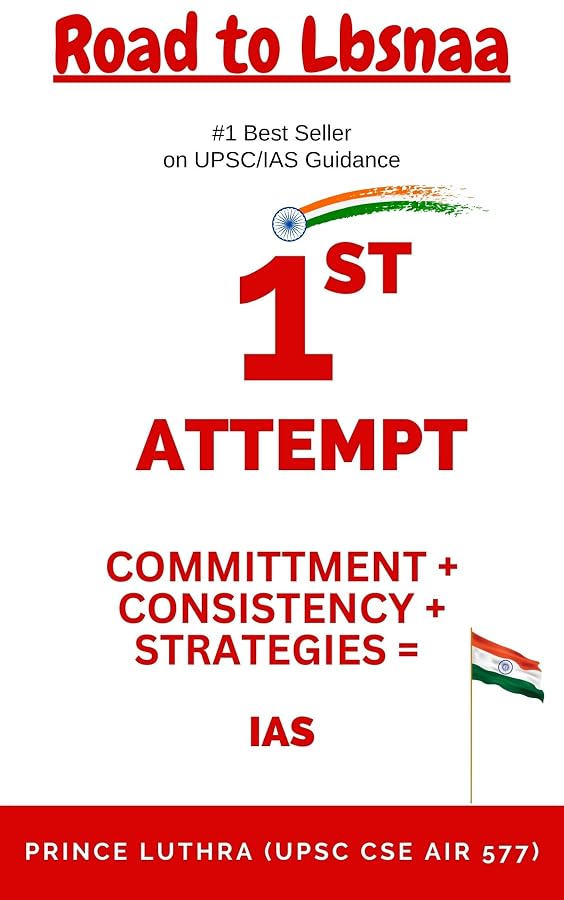
Road to LBSNAA: 1ST Attempt
Prince Luthra · UPSC CSE AIR 577
The full journey to the Academy — how the preparation was built, what went wrong, and what finally worked.
Read on Kindle — ₹99Also in paperback and hardcover
As an Amazon Associate, purchases made through this link may earn a commission at no extra cost to you.