Emotional Intelligence in Indian Officers: Careers Worth Studying
Bedi in the prison, Sreedharan under deadline, Kalam with students, Seshan with the political class — the same capacity showing up in very different offices.
Fortune favours the bold
Bedi in the prison, Sreedharan under deadline, Kalam with students, Seshan with the political class — the same capacity showing up in very different offices.
Decision-making, conflict, public trust, team management, crisis. Where emotional intelligence changes administrative outcomes, and the four-branch model that defines it as an ability rather than a trait.
Emotional intelligence is not softness and it is not charm. It is a set of five working capacities, and an officer who lacks any one of them will fail in a predictable way.
The same techniques that build a vaccination drive can build a propaganda campaign. What separates them is not the tool but the respect it shows for the person being persuaded.
A sanitation programme that worked mainly as a persuasion campaign — social proof, authority, emotional appeal and community pressure, applied at national scale.
Public health, tax compliance, road safety, conservation: the areas where an Indian administration achieves more by changing what people want than by changing what the law permits.
Persuasion is not rhetoric. It is a small set of levers that reliably move belief — and an officer who cannot name them cannot use them or resist them.
Most of what a citizen does in response to the state is not compelled and not freely chosen either. It sits in the wide space between, and this part maps it.
Three Indians look at the same institution and see three different things. Then a case study: an encroachment, a deadline, and an officer deciding what kind of official he is.
Attitudes towards social problems are not chosen in adulthood. They are assembled, quietly, from family, school, faith, peers, media and the accidents of personal experience.
From the author
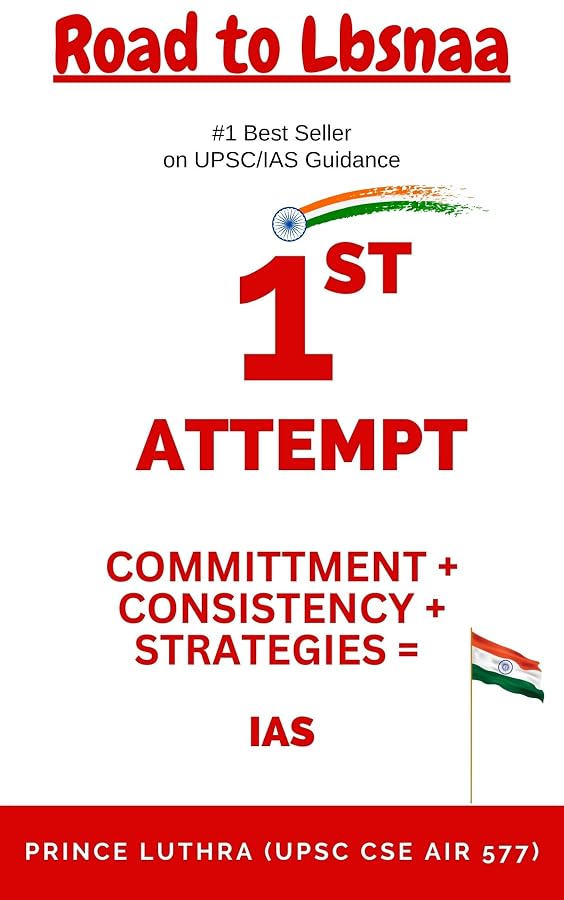
Road to LBSNAA: 1ST Attempt
Prince Luthra · UPSC CSE AIR 577
The full journey to the Academy — how the preparation was built, what went wrong, and what finally worked.
Read on Kindle — ₹99Also in paperback and hardcover
As an Amazon Associate, purchases made through this link may earn a commission at no extra cost to you.