Balancing the Two — and Building the Attitude an Officer Needs
Nobody is asking you to choose between rules and responsiveness. The harder question is how an administration deliberately builds officers who can hold both.
Fortune favours the bold
Nobody is asking you to choose between rules and responsiveness. The harder question is how an administration deliberately builds officers who can hold both.
The same officer, the same file, two entirely different dispositions towards it. Each has real merits, and each fails in a way the examiner expects you to name.
An attitude is not an opinion you hold; it is a settled disposition that decides what you notice, what you excuse and what you refuse. This part takes it apart into its three working components.
The three institutions are usually described as reinforcing each other. In a real Indian childhood they frequently contradict each other — and what a person becomes depends largely on how that contradiction is resolved.
Schools teach values twice: once in the moral science period, which children forget, and once through how the institution actually behaves, which they remember for life.
A person’s values are not only what they were taught. They are also what the people around them get away with — and that is the part of ethics no family controls.
Every officer who refuses a bribe at forty was taught something at seven. This part is about how that teaching actually happens — and why the family is both the most powerful moral influence in a person’s life and the least reliable.
Knowing sixteen thinkers is useless if you cannot pick one under time pressure. This part is the selection table and the three ways to deploy a thinker without sounding decorative.
Three Western thinkers who between them define the modern vocabulary of public ethics: duty, welfare, and fairness under uncertainty.
Four thinkers, two civilisations, one shared question: what kind of person should hold power, and how is such a person made?
From the author
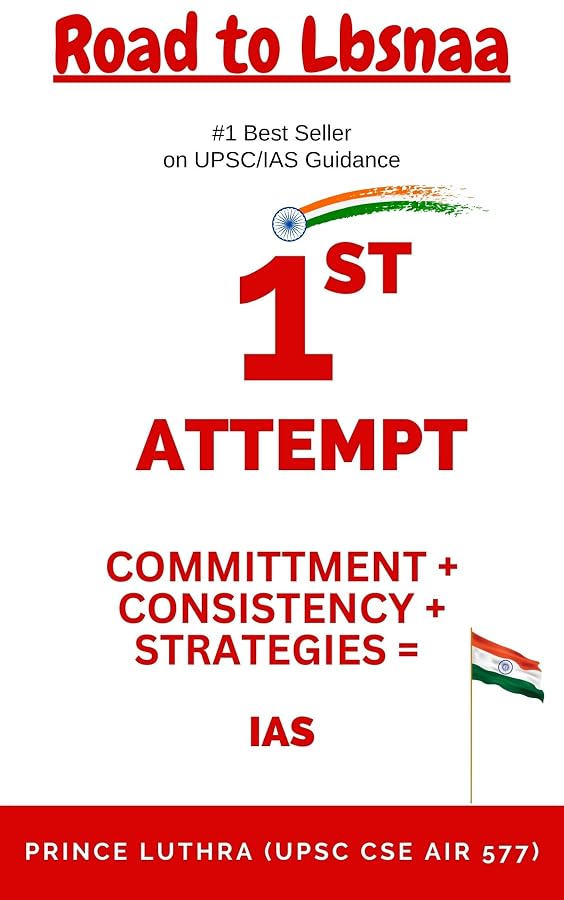
Road to LBSNAA: 1ST Attempt
Prince Luthra · UPSC CSE AIR 577
The full journey to the Academy — how the preparation was built, what went wrong, and what finally worked.
Read on Kindle — ₹99Also in paperback and hardcover
As an Amazon Associate, purchases made through this link may earn a commission at no extra cost to you.